Resources

Explore our collection of free downloadable therapy worksheets designed to support your mental well-being! These resources aim to help you gain insight into your thoughts, emotions, and behaviors while providing practical tools for self-reflection and growth. Whether you're looking to build healthier habits, manage stress, or deepen your self-awareness, these worksheets can be a helpful companion on your journey.

Mental Health Worksheets

Infographic titled 'Unhelpful Thinking Styles' detailing various cognitive distortions. The sections include 'Black and White Thinking' with quotes about failing or doing everything right or not at all, 'Mental Filter' emphasizing focusing only on negative aspects and ignoring positives, 'Jumping to Conclusions' about making assumptions without evidence, 'Magnification' or catastrophizing, 'Comparison Thoughts' about feeling inadequate or envious, 'Disqualifying the Positives' dismissing achievements, 'Shoulding' imposing harsh expectations, 'Overgeneralizing' about negative experiences, 'Labeling' assigning negative labels to oneself or others, and 'Blaming' holding others responsible. Each section has illustrative graphics of stylized human figures and abstract symbols.

Learn to identify and challenge common cognitive distortions that contribute to anxiety, stress, and negative thought patterns.

Unhelpful Thinking Styles

A diagram explaining the cognitive triangle, depicting a situation at the top, leading to different emotional responses in circles: anger, happiness, and sadness. An illustration of a person with an idea lamp above their head is at the center, with arrows pointing to and from the situations and emotional responses. Accompanying text explains the connection between situations, thoughts, emotions, and behaviors.

Discover the connection between your thoughts, feelings, and behaviors. Recognize how changing one aspect of the triangle can positively impact your well-being.

The Cognitive Triangle

Diagram illustrating the three states of the mind: emotional, logical, and wise. The emotional mind is represented by a pink brain with heart eyes, the logical mind by a pink brain wearing glasses and a graduation cap, and the wise mind by a green label. The diagram shows the relationships and overlaps among these states, emphasizing the importance of balance for mental health.

Learn how to access your ‘Wise Mind’—the state where logical and emotional thinking work together—helping you make clearer, more balanced decisions and improve emotional regulation.

The Wise Mind
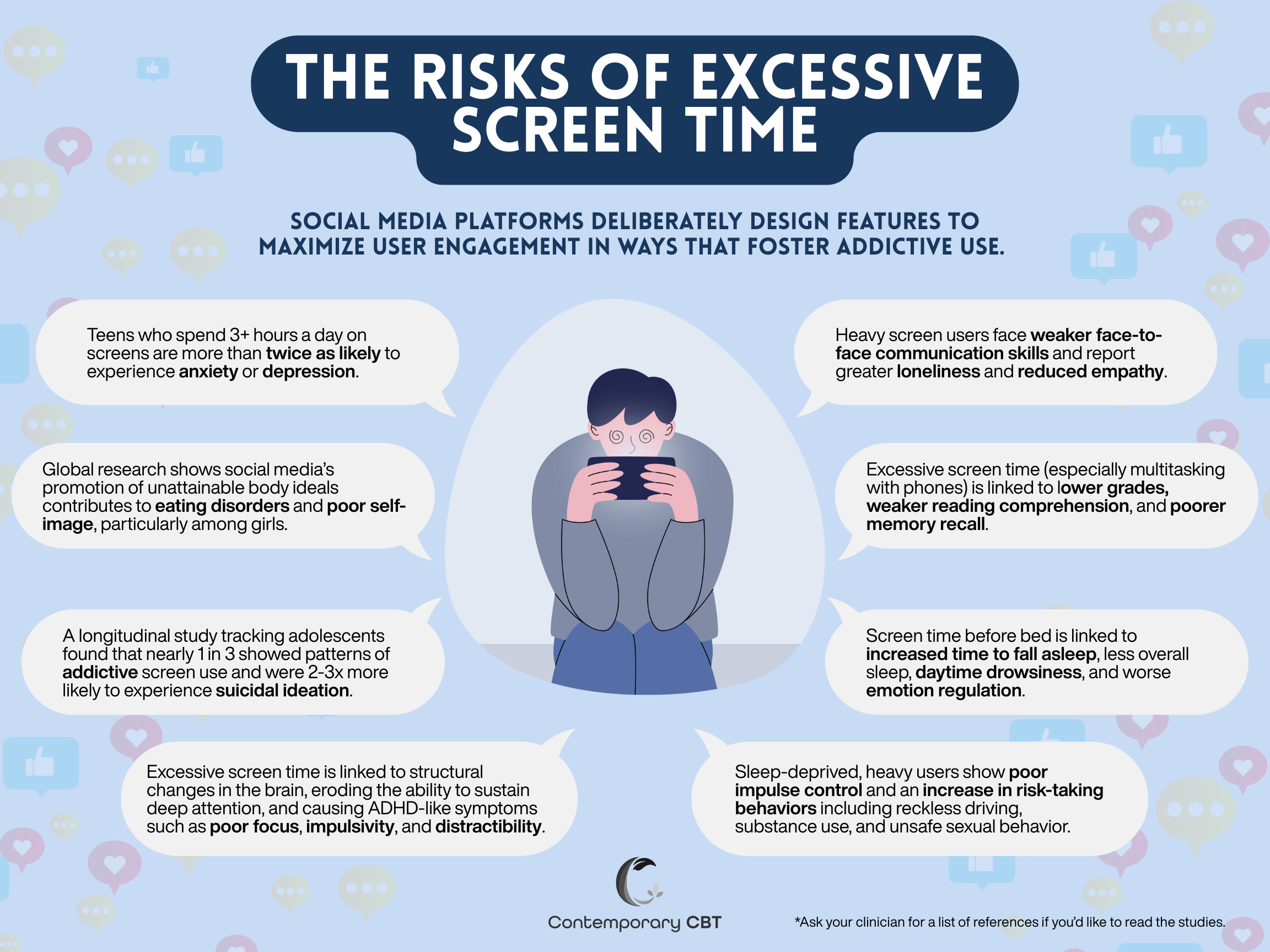
Infographic about the risks of excessive screen time, highlighting effects like anxiety, depression, poorer academic performance, and risky behaviors, with illustrations of a person using a phone.

Risks of Excessive Screen Time

A research-based snapshot of how excessive screen time impacts mental health, attention, sleep, and emotional well-being in children and adolescents. —helping families make more informed digital choices.

A guidance panel from Contemporary CBT offering tools for managing intense emotions. The panel includes icons representing various tools and exercises, and detailed text instructions about temperature regulation, intense exercise, paced breathing, performance practices, and meditation techniques.

Learn fast-acting “tipp”s to calm overwhelming emotions.

TIPP: Navigating Intense Emotions

An infographic titled "Healthy Habits—What's the Evidence?" featuring sections on healthy eating, sleeping well, breathing and mindfulness, move your body, and get outside. The visual includes decorative elements like blueberries, a rolled-up yoga mat, a dumbbell, flowers, and birds, with a light purple background and green accent colors.

Healthy Habits

Learn how lifestyle choices impact your mental health.

A printed chart titled "Dysfunctional Thought Record" with columns labeled Situation, Automatic Thoughts, Unhelpful Thinking Style, Emotions, Alternative Thoughts, and New Emotions. The chart includes colorful illustrations representing different thinking styles, such as thinking in black and white, mental filters, jumping to conclusions, magnification, minimization, personalization, blaming, shoulding, overgeneralizing, labeling, and more. The chart appears to be from a contemporary cognitive-behavioral therapy resource.

This tool helps you track distressing thoughts, recognize cognitive distortions, and reframe unhelpful thinking to improve awareness, cognitive flexibility, and emotion regulation.

Dysfunctional Thought Record
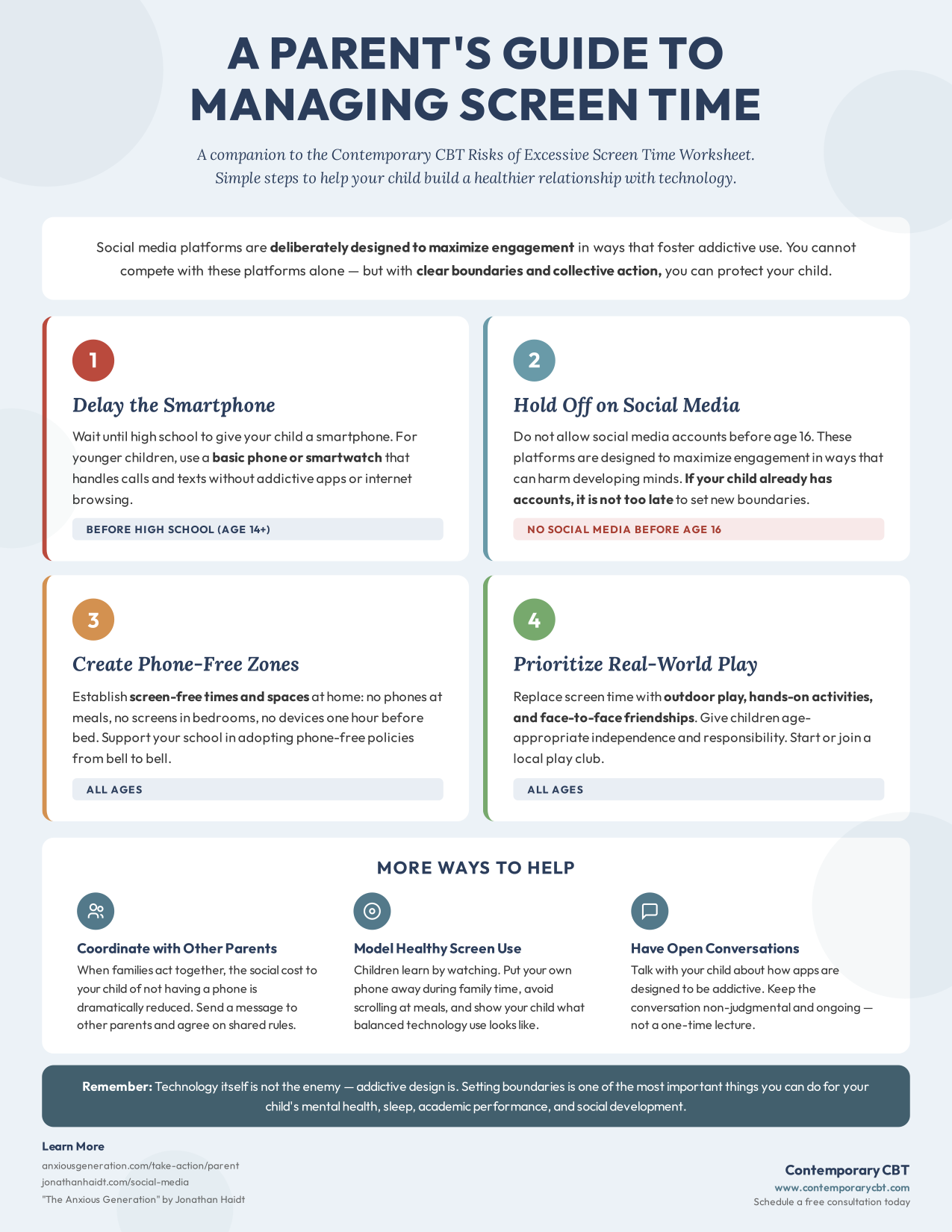
A digital infographic titled 'A Parent's Guide to Managing Screen Time' outlining steps like delaying smartphones, holding off on social media, creating phone-free zones, and prioritizing real-world play, with tips for parents of children of all ages.

Screen Time Guide for Parents

A companion to the Risks of Excessive Screen Time worksheet- simple steps to help your child build a healthier relationship with technology. 

Community Partners and Referral Resources

Psychiatry:

Out-of-State Telehealth Licensure Links:

Huong (Kimmie) Iodice, PMHNP
You Psychiatry Clinic